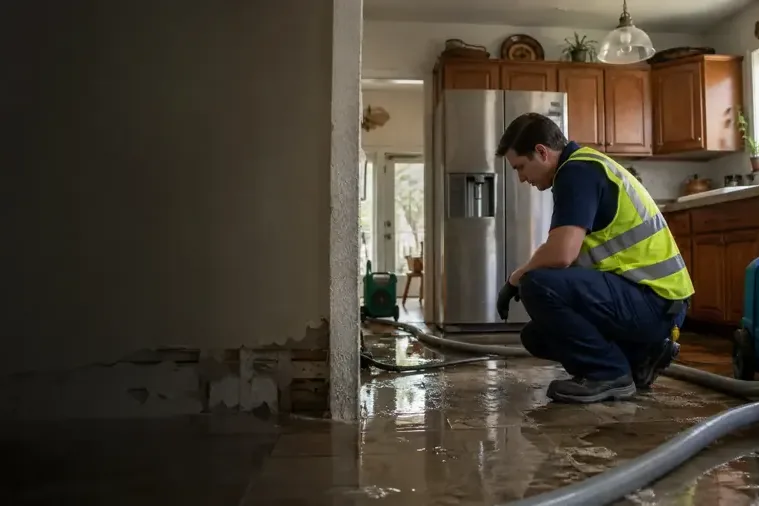
Appliance leaks come from hoses and valves under constant pressure. Rubber washer hoses crack with age, plastic ice maker tubing splits, dishwasher connections loosen, and the braided supply under a toilet or sink lets go without warning.
Clean or gray water
A supply hose leaks clean Category 1 water. A washer drain, a dishwasher discharge or a toilet overflow without waste is Category 2, gray water, so the crew cleans surfaces and usually replaces the pad before drying.
- Washer hose bursts in the laundry or garage
- Dishwasher supply or drain leaks under the counter
- Refrigerator ice maker and water dispenser tubing
- Toilet and sink supply hoses and shutoff valves
Water you cannot see
Kitchen water runs under cabinets, behind the dishwasher and into the toe kick space. The tech who does the walkthrough checks those spots with a pinless meter and removes toe kicks to push dry air under the cabinets, because laminate and vinyl plank can hide water for days.
The Consumer Product Safety Commission lists recalls on hoses and appliances, and the WaterSense Fix a Leak checks catch slow drips early.
Prevention that works
- Braided stainless washer hoses, checked every year
- A shutoff you can reach behind the washer
- Leak sensors under the sink and the dishwasher
- A drain pan under a washer on an upper floor
If the water reached the slab, structural drying explains how the concrete gets dried.