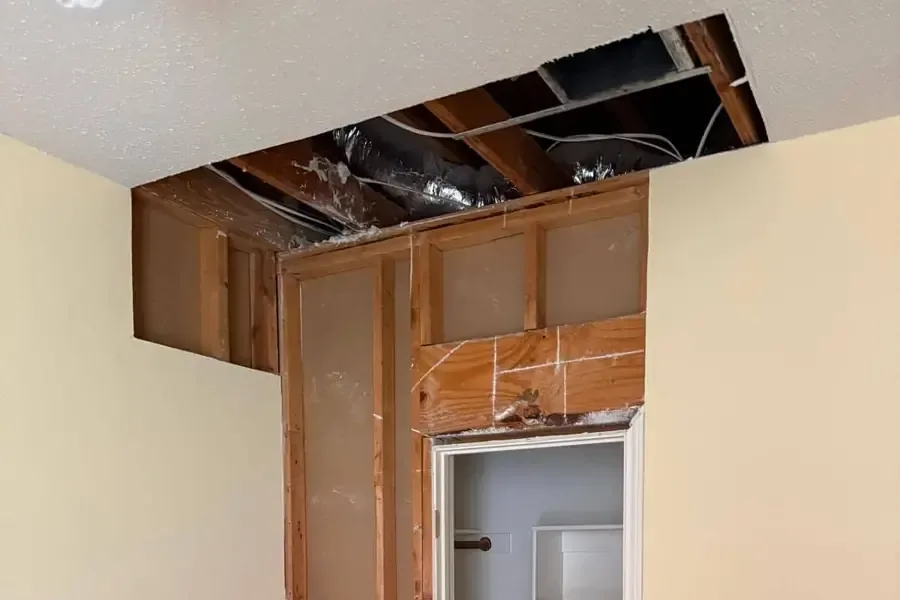
A ceiling leak starts inside the house: a roof-mounted evaporative cooler, an attic air handler, a bathroom upstairs or a supply pipe in the attic. Unlike a roof leak, it can run in dry weather and often keeps going until someone finds the valve.
Common sources in East County homes
- Evaporative coolers with a stuck float valve or a cracked pan
- AC condensate pans and drains clogged in the summer heat
- Tubs, showers and toilets on a second floor
- Supply pipe and water heaters in attics
The EPA WaterSense program has simple checks for running toilets and dripping fixtures.
Electrical comes first
Water above a ceiling often finds light fixtures, fans and junction boxes. The tech who does the walkthrough shuts off power to the affected circuits before opening anything, and an electrician checks fixtures that took on water.
The Consumer Product Safety Commission lists recalls on appliances and connectors that leak.
Opening and drying the ceiling
A sagging ceiling holding water gets drained through a small hole before it falls. The crew then removes drywall that is soft or stained through, leaves firm drywall to dry in place and moves air through the joist bays. Roof leaks from rain are a separate job on the outside envelope.
- Insulation above the wet area checked and pulled if soaked
- Walls below the leak checked for wicking
- Readings logged on the same spots daily