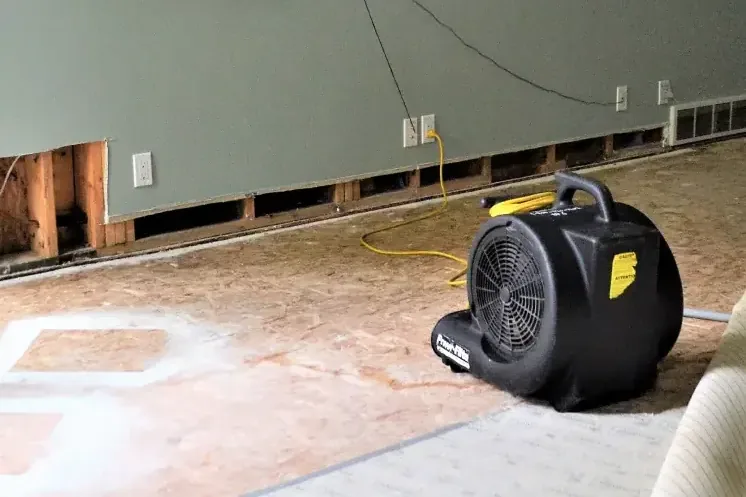
Structural drying is the part of a water job that takes the longest and gets skipped most often. Water that soaked into framing, subfloor, cabinets and concrete keeps evaporating for days after the floor looks fine, and closing it in early causes swelling, odor and mold.
Class of loss sets the equipment
The IICRC standard sorts a loss into four classes by how much water got into the structure and how hard the materials give it up.
- Class 1: a small area of low-porosity materials
- Class 2: a whole room, with water wicked up the walls
- Class 3: water from overhead, soaking ceilings, walls and floors
- Class 4: dense materials like concrete, hardwood and plaster that hold water deep
Class 4 losses, common with slab leaks, often need desiccant dehumidifiers or drying mats.
How the drying team measures
The tech takes a dry reference reading from an unaffected room, marks spots on wet materials and logs them every day along with temperature and humidity. That psychrometric log shows whether the equipment is working and when the job is done.
Inland air is usually dry, which helps, but a wet winter week raises indoor humidity and slows evaporation. The EPA indoor air quality pages explain why moisture control matters, and the EPA moisture guidance sets the 24 to 48 hour window.
What it takes
- Air movers set to each room's evaporation load
- LGR dehumidifiers for most losses, desiccants for Class 4
- Cavity drying through small holes instead of full demolition
- Equipment checked and moved as areas dry
The drying time estimator gives a rough range for a specific loss.