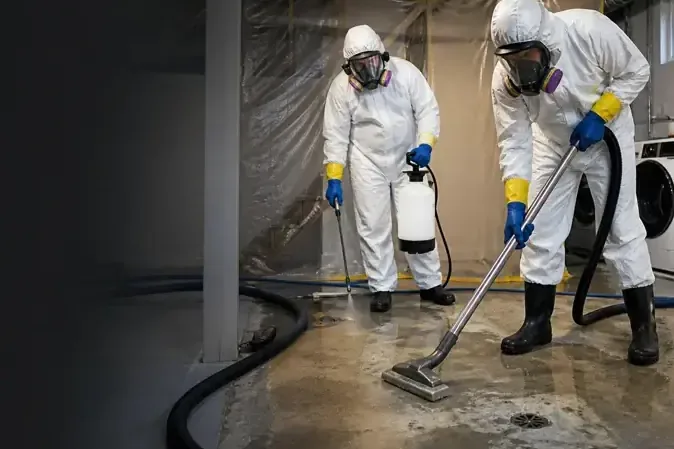
Sewage is Category 3 water the moment it leaves the drain. It carries bacteria and viruses, so the work starts with containment and protective gear, not a mop. That holds whether the backup came from a sewer lateral or a full septic tank.
Sewer lateral or septic tank
Homes on public sewer back up when roots, grease or a sag block the lateral between the house and the main. Some larger rural lots run on septic tanks instead, and a full tank or a failing leach field pushes waste back up through the lowest drain.
- Toilets or tubs gurgling when the washer drains
- Water rising in the shower when a toilet flushes
- Sewage odor at floor drains or cleanouts
- Soggy ground or odor over the septic field
The EPA septic systems program covers tank care and pumping schedules.
How Category 3 cleanup works
The crew seals the area with plastic containment and runs HEPA air scrubbers under negative pressure. Every member wears at least a respirator, gloves, eye protection and a suit.
- Standing sewage extracted into sealed containers
- Carpet, pad, drywall and insulation the water touched removed, usually at least 2 feet above the water mark
- Hard surfaces cleaned, then treated with an EPA-registered antimicrobial at its labeled dwell time
- Structure dried and checked before rebuilding
Safety first
Keep children and pets out of the area and do not run fans, which spread contaminated droplets. OSHA sets the protective-equipment rules crews follow on sewage work, and structural drying finishes the job once the area is clean.