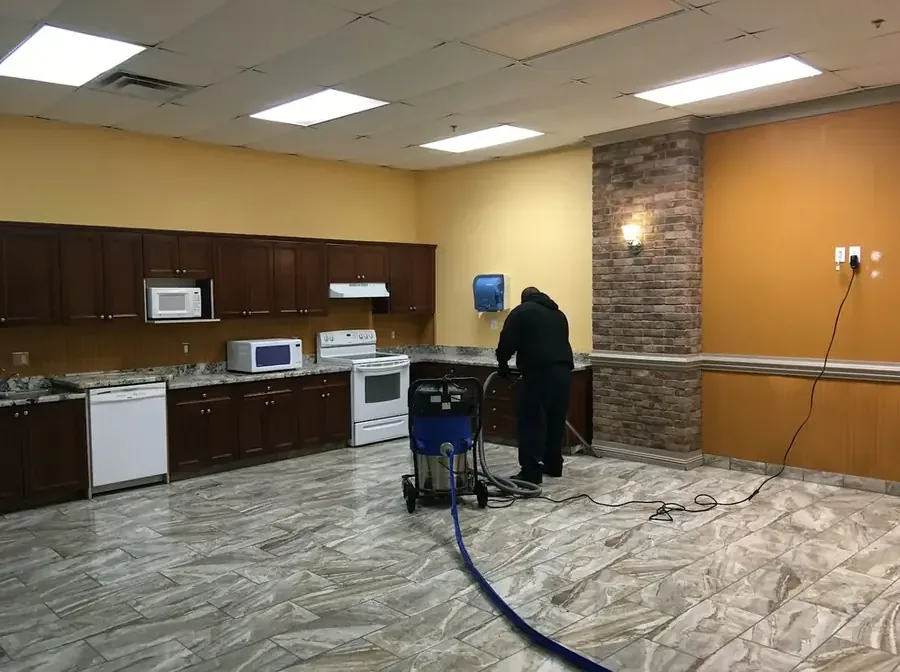
Extraction is the cheapest part of any dry-out and the part that saves the most. Every gallon pulled off the floor is a gallon the dehumidifiers never have to evaporate, which is why the extraction crew works before any air mover goes down.
What gets extracted
Most East County homes sit on concrete slabs under tile, laminate or carpet. Water spreads sideways across a slab instead of draining down, so it reaches more rooms than people expect.
- Standing water on tile, vinyl and laminate
- Carpet and pad, with weighted or ride-on extraction tools
- Water trapped under cabinets and toe kicks
- Water pooled on the vapor barrier under a manufactured home
Truck-mounted or portable
A truck-mounted unit has the strongest vacuum and carries the water out to the truck, which suits large losses and long hose runs on ranch lots. Portable extractors handle upstairs rooms, apartments and tight spaces.
If the water came in from outside, it counts as contaminated. Ready.gov flood safety covers the precautions while the crew works.
Extraction is not drying
Pulling the water out still leaves moisture in drywall, framing and the slab. The drying team follows with air movers and LGR dehumidifiers and checks readings daily, the second half covered under structural drying.
The EPA moisture guidance explains why wet materials need drying inside 24 to 48 hours.