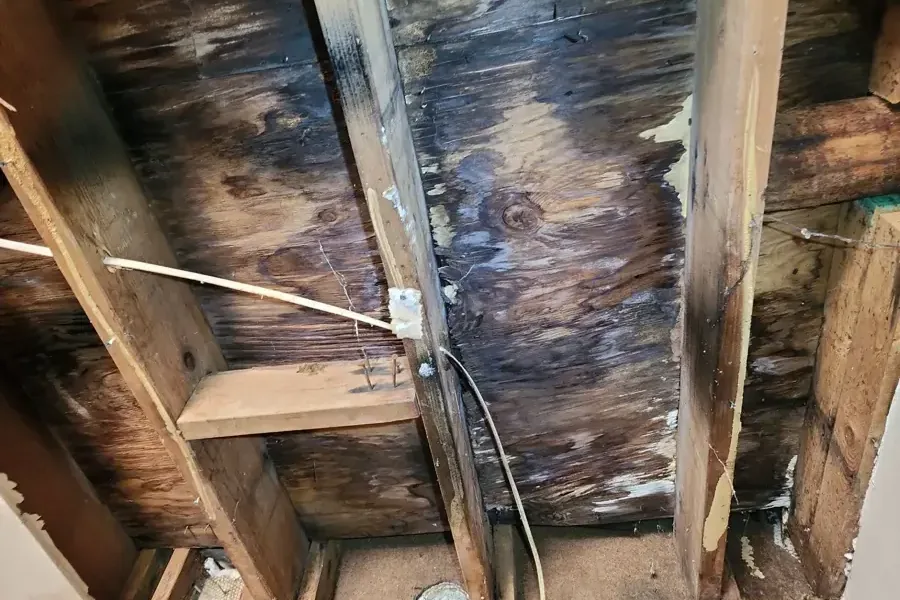
A roof leak is a building-envelope failure: rain gets past the roof covering and into the attic, then down into ceilings and walls. Months of summer sun dry out underlayment, sealant and rubber boots, so the first heavy rain of the season exposes the weak spots.
Where roofs leak in the valley
- Cracked or slipped clay and concrete tiles over worn underlayment
- Flashing at chimneys, skylights and wall joints
- Dried-out boots around plumbing vents
- Ponding on low-slope roofs over patios and additions
- Openings around a roof-mounted cooler or AC unit
A roofer repairs the roof; the restoration team handles the water already inside.
What happens in the attic
The tech who does the walkthrough checks the decking, rafters and insulation with a meter and a thermal camera. Wet blown-in or batt insulation loses its value and holds water against the drywall, so it comes out, while decking and framing get dried in place.
The EPA moisture guide explains why wet building materials need drying within 24 to 48 hours.
Ceilings below the leak
A ceiling that sags or holds water gets drained and opened from below, carefully. Firm drywall that only took a little water can often dry in place. Ceiling leaks from plumbing and coolers inside the house are a different job.
The National Weather Service in San Diego posts storm watches before the rain arrives.