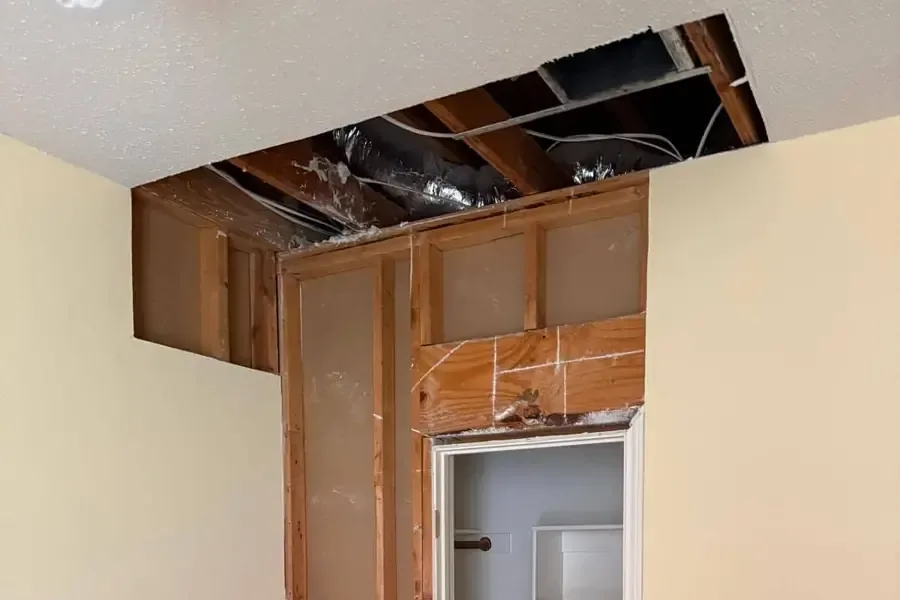
Summers in Lakeside are hot and dry, and air conditioners run for months. Each unit pulls water out of the air, and that water has to drain somewhere. When the drain clogs or cracks, the ceiling below is often where it lands.
Key takeaways
- An air conditioner removes moisture from the air as it cools, and that water leaves through a condensate drain.
- A clogged or cracked drain, or a rusted pan, sends water into the ceiling, usually under an attic unit or near a hallway closet.
- Signs include a brown ring on the ceiling, drywall that sags or bubbles, water at the unit, or a system that shuts itself off.
- Turn the cooling system off at the thermostat and the breaker before the water spreads.
- Ceiling drywall and attic insulation that stay wet are cut out and dried.
How an AC Unit Makes Water
A cooling coil pulls heat and moisture from indoor air. The moisture condenses on the coil, drips into a pan and runs out through a drain pipe.
Even in dry air, a system that runs all day produces a steady trickle of water, and the drain is built to carry it away.
Attic units are the usual trouble spot. A pan that overflows up there has only the ceiling below to land on.
- A primary drain pipe leads outside or to an approved drain.
- A drain pan sits under the coil as a backup.
- A float switch, where one is installed, shuts the unit off when the pan fills.
What Goes Wrong With the Drain
Dust, algae and debris slowly build a slime plug inside the drain pipe. A cracked pipe, a loose joint or a rusted pan can leak as well.
Because the unit runs for months with little attention, small problems can go on for weeks before anyone looks up.
Drain pipe that is a few decades old is more likely to have sagged, cracked or loosened at a joint. A pan that was fine for years can still rust through.
- A clogged drain backs water into the pan until it overflows.
- A rusted pan lets water through even when the drain is clear.
- A sagging or disconnected drain pipe leaks at the joint.
- A dirty filter lets the coil ice over, and the melt overflows the pan.
Signs the Ceiling Is Taking Water in Lakeside
An AC leak only happens while the system runs, so a stain can appear and fade with the weather. That on and off pattern is a clue that the source is the cooling system, not the roof.
Where the stain sits is a second clue. A ring directly under an attic air handler, or along a hallway that holds the unit, points to the cooling system, while a stain along an outside wall or under the roof points toward the roof.
- A brown or yellow ring on the ceiling that grows over days.
- Drywall that bubbles, sags or feels soft to the touch.
- Water dripping near a hallway closet or under an attic unit.
- A musty smell that returns whenever the AC runs.
- A system that shuts off or a float switch that trips.
First Steps at Home
Stopping the source comes first, and a ceiling leak water damage team can take over once the unit is off. Water held in drywall is heavy, so a sagging ceiling is also a safety concern.
- Turn the cooling system off at the thermostat, then at the breaker.
- Set out buckets and move furniture, rugs and electronics out from under the stain.
- Stay out from under a sagging ceiling, because wet drywall can fall.
- Photograph the stain, the unit and the drain before anything is moved.
- Leave the system off until the drain has been cleared, even if the leak seems to have stopped.
How the Ceiling and Attic Are Dried
The first job is finding how far the water spread. The drying team checks the ceiling, the walls below and the attic space above with a moisture meter.
Opening and removing
Drywall that is soft or saturated is cut out, and wet attic insulation is pulled because it holds water against the ceiling. Dry sections are left in place when readings allow.
Insulation above a wet ceiling is checked by hand and with the meter. Heavy, clumped or compressed insulation has absorbed water and is bagged out.
Drying the cavity
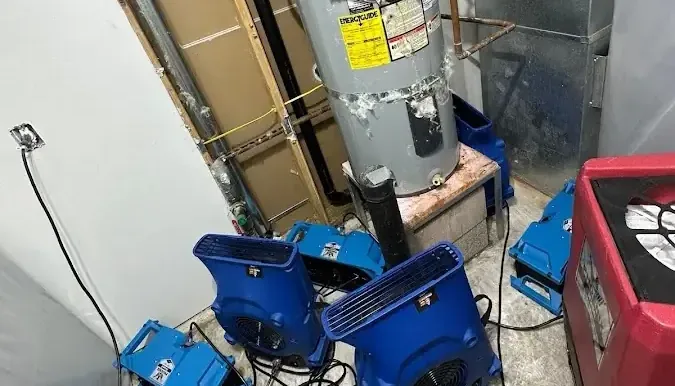
Air movers and dehumidifiers dry the joists, the remaining drywall and the framing. Readings continue until each material reaches its target, and the structural drying process explains how that is measured.
The attic joists are dried along with the ceiling, because wood that stays wet can stain and weaken over time.
Water Category and Why It Matters
Condensate begins as clean water, but it sits in a pan and a drain where algae can grow. When it soaks drywall and insulation, it is usually treated as Category 2, or gray water.
That changes the plan a little. Porous materials that stayed wet for a long time are more likely to be removed than dried in place.
The date the leak began and how long it ran help with that call. A system that leaked for a weekend is a different job from one that leaked all summer.
- A short, recent leak may allow drywall to be dried in place.
- A long-running leak raises the chance that insulation and drywall come out.
- Persistent odor is a sign the materials stayed wet too long.
Preventing a Repeat
Most condensate leaks are preventable with simple upkeep. A heating and cooling technician can flush the drain and check the pan before heavy summer use.
Mold can begin on wet drywall within 24 to 48 hours, so a slow leak that goes unseen can become a larger job. The drying time estimator shows how the schedule grows when drying starts late.
A quick look at the ceiling near the unit once a month in the hot season takes seconds. A small ring caught early is a short job.
- Have the condensate drain flushed before the hot season.
- Change filters on schedule so the coil does not ice over.
- Ask the technician about a float switch that shuts the unit off.
- Know where the breaker for the cooling system is.
Questions
Is AC condensate water clean?
It starts clean, but it sits in a pan and a drain where algae grows. When it soaks drywall and insulation it is generally treated as gray water, Category 2.
Can I paint over the stain?
Paint hides the ring but not the moisture. If the drywall or insulation behind it stays wet, the stain returns and the material keeps weakening.
Will the ceiling dry on its own?
Sometimes a small, brief leak dries without help, but moisture trapped above the ceiling is hard to judge by eye. A meter reading tells whether the materials are actually dry.
Who fixes the drain itself?
A heating and cooling technician clears or replaces the drain and checks the pan. The restoration team dries the ceiling, the walls and the attic space.
Is a roof cooler leak the same thing?
No. A roof evaporative cooler is a separate system with its own water supply, and its leaks have different causes. Both can stain a ceiling, which is why the source is traced before any drying starts.
How can I tell an AC leak from a roof leak?
An AC leak happens when the cooling system runs, even on dry days, while a roof leak follows rain. A stain right under an attic air handler is a strong hint that the system is the source.