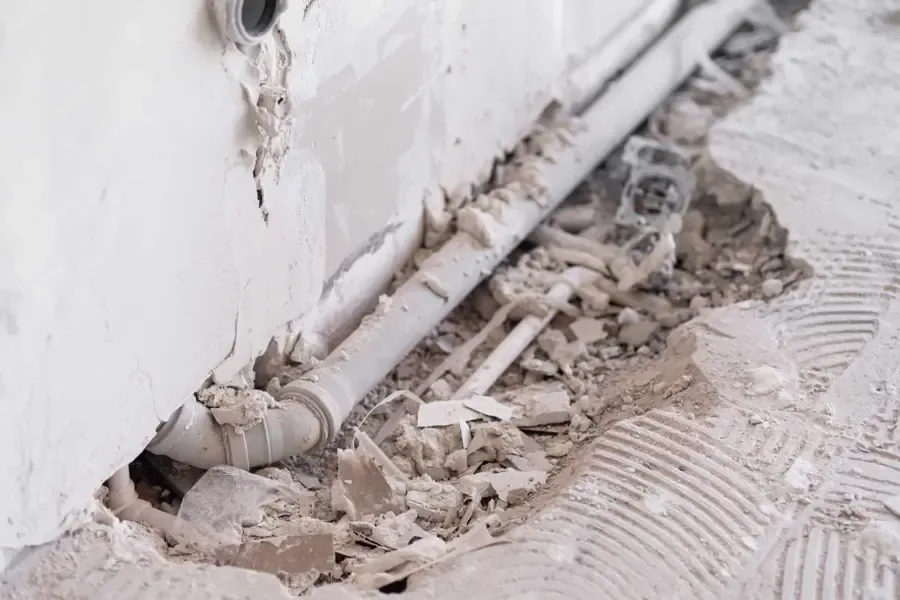
Many Lakeside homes sit on concrete slabs with the copper supply pipe running underneath the floor. When one of those pipes develops a pinhole, the water spreads below the flooring long before a stain shows up.
Key takeaways
- A slab leak is a hole in a pressurized supply pipe under the concrete floor, so water keeps flowing until the main valve is closed.
- Hard imported water wears copper from the inside, and pinholes are a common way pipe fails in homes built from the 1950s through the 1980s.
- Warning signs include a warm floor spot, the sound of running water with every tap off, a moving meter dial and damp baseboards.
- Close the main shutoff first, then photograph the wet areas before anything is moved.
- A plumber finds and fixes the pipe, and the restoration team lifts wet flooring and dries the slab to a measured reading.
Why Slab Leaks Show Up in Older Homes Here
Much of the housing around here dates from the 1950s through the 1980s, and a large share of those ranch and tract homes were built on concrete slabs. In a slab home the copper supply pipe usually runs under the floor, out of sight and out of reach.
The water in this part of San Diego County is hard and imported. Over decades, hard water can wear copper thin from the inside until a pinhole opens.
A pinhole releases a thin, steady jet of pressurized water. It runs around the clock until someone closes the main valve, and the slab passes that water sideways into walls and under flooring.
- Supply pipe stays under constant pressure, so a pinhole never pauses on its own.
- Concrete hides a leak, so the first sign is often at a baseboard or a floor edge.
- Any home with pressurized supply pipe under the floor can see the same failure, whatever the age of the house.
Warning Signs of a Slab Leak
A slab leak rarely announces itself with a flood. It leaves small clues that add up over days or weeks.
One sign alone can have another cause. Two or three together make a slab leak worth confirming right away, because the water keeps working under the floor while the question is open.
- A warm spot on tile or carpet, which points to a leaking hot water pipe underneath.
- The sound of running or hissing water when every faucet and appliance is off.
- A water meter dial that keeps turning after the whole house is shut off.
- Damp baseboards, peeling paint at the base of a wall, or a musty smell from carpet.
- Laminate that lifts, tile that sounds hollow, or grout that stays wet.
- A water bill that climbs with no change in how the household uses water.
First Steps at Home
Stopping the water comes first, and everything else can wait until the supply is closed. A slab leak water damage restoration team can begin once the source is under control.
A plumber is still needed to find and repair the pipe, and that visit can be arranged while extraction and moisture mapping begin.
- Turn every faucet and appliance off, then watch the meter dial. A dial that keeps turning points to a leak in the pipes.
- Close the main shutoff valve, usually at the meter box near the street or where the supply pipe enters the house.
- Move rugs, furniture and boxes off wet flooring.
- Photograph and video every wet area before anything is moved or removed.
- Switch off power to wet rooms only if the breaker panel is somewhere dry.
How the Leak Is Found and the Floor Is Opened
Finding the leak is a plumbing job, and the restoration team does not guess at it. A plumber or a leak detection technician pinpoints the pipe, often with listening gear or a thermal camera.
Mapping the wet area
While the leak is located, the drying team maps where the water went. Moisture meters and a thermal camera show wet baseboards, wet drywall and flooring edges that look dry from above.
- Readings are taken on the slab, the walls and the flooring in each room.
- Photos and readings are logged so the starting point is on record.
Lifting what is wet
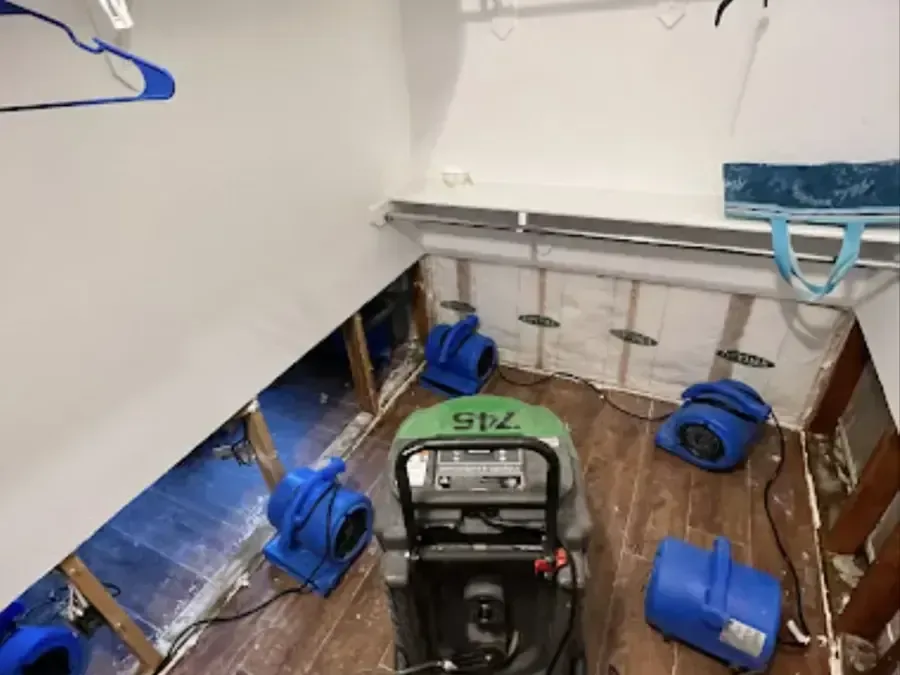
Wet flooring is lifted where the water spread. Carpet and pad are usually removed, laminate and hardwood are pulled once they swell or cup, and tile is checked at the grout and the edges.
Baseboards come off and drywall is cut a short way up the wall when water has wicked into it. That opens the cavity so air can reach it.
What a Slab Leak Does to Floors and Walls
The slab is the floor's foundation, so water that escapes from a pipe below it has to travel through cracks, joints and edges to show itself. By the time it does, flooring and wall bases are often wet across more than one room.
Each flooring type reacts differently, and the team checks them all instead of judging by the surface.
Carpet, laminate and hardwood
Carpet and pad hold water against the slab and are usually removed. Laminate and hardwood swell at the seams and can cup within days.
Tile and walls
Tile can look fine while the setting bed beneath it is wet. Drywall at the base of walls wicks water upward and may need a short flood cut to dry the cavity.
Drying the Slab and the Rooms
Concrete holds moisture and releases it slowly, so drying a slab takes more than an open window. Air movers and LGR dehumidifiers run together to pull moisture out of the slab surface and the walls.
The goal is a measured one: within 2 to 4 points of a dry reference reading. Readings are taken every day, and equipment comes out only after the final numbers are on target.
The structural drying process explains each step, and the drying time estimator gives a rough idea of how long a floor of this kind may take.
Why Early Detection Matters
A pinhole that runs for days soaks far more than one caught in hours. Wet flooring and drywall can start to grow mold within 24 to 48 hours.
Catching the leak early keeps the wet area small, keeps more flooring in place and shortens the dry-out. The water damage cost calculator shows how room size and materials change a planning number.
- A small wet area means fewer materials are removed.
- Early drying lowers the chance of odor and mold.
- A short repair window keeps more rooms usable.
Questions
How do I tell a slab leak from a leak above the floor?
A slab leak shows up at floor level, often with a warm spot, a running-water sound or a moving meter dial with every fixture off. A leak above the floor usually shows at a fixture, in a wall or on a ceiling. A plumber can confirm which one it is.
Does the restoration team repair the pipe?
No. A plumber finds and repairs or reroutes the pipe. The restoration team removes the water, lifts wet materials and dries the structure.
Is slab leak water safe to touch?
Water from a supply pipe starts out clean, which is Category 1. It can get worse as it sits in soil, flooring and drywall, so wet materials are not left in place for long.
How long does a slab take to dry?
It depends on how long the leak ran, what flooring sits above it and how much of the slab is wet. Concrete dries slowly, so plan for several days, with daily readings deciding when the job is done. The estimator linked above shows a rough range.
Can I keep using water in the house?
Keep the main valve closed until a plumber locates the leak, then use water only as the plumber allows. Keeping bottled water on hand for a day or two makes this easier.
Will the whole floor have to come up?
Not always. The team lifts flooring where moisture readings show water and leaves dry areas in place. Mapping the wet zone first is what keeps the removal as small as possible.