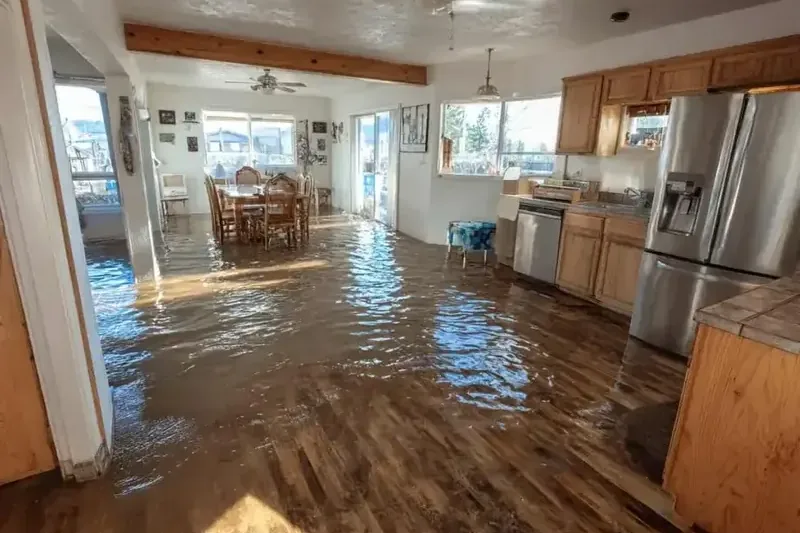
Lakeside has a short wet winter with a few heavy storms. Homes near the San Diego River bottom below El Capitan Reservoir, and near Los Coches Creek, are where runoff from those storms can reach the house.
Key takeaways
- Runoff and creek water are Category 3, because they carry soil, bacteria, fuel and sewage.
- Stay out of standing water, especially near outlets, cords and the breaker panel.
- If water keeps rising or anyone is at risk, leaving the house comes before any cleanup step.
- Extraction comes first, then removal of porous materials, cleaning and drying.
- Photograph the high-water mark inside before cleanup so the loss is on record.
Where Winter Water Comes From
The San Diego River runs below El Capitan Reservoir, and Los Coches Creek is another water feature in the community. In a dry stretch both can look harmless.
A few heavy storms in the short wet winter can change that. Rain that hits slopes and hard ground runs downhill, and low yards and floors near a river bottom or a creek are where it ends up.
Knowing the low spots on a lot, a driveway or a street is as useful as knowing the name of the creek. A walk around the property before winter shows where water would go.
Winter in this community is short, so many homeowners go months without thinking about runoff. That gap is why the first storm of the season tends to catch people with boxes still on the garage floor.
- Rising water from the river bottom or the creek banks.
- Runoff from slopes and driveways that pools against doors.
- Water that backs up through low drains when the ground is saturated.
Why Runoff Is Treated as Contaminated
Storm runoff collects soil, animal waste, fuel, fertilizer and sewage as it moves. Creek and river water carry the same mix.
That puts it in Category 3 under the IICRC S500 standard. Even when the water looks like plain mud, it is handled as contaminated.
The crew wears protective gear, bags porous debris on site and keeps wet boots off clean floors. Those steps are routine for Category 3 work and are part of why it takes more planning than a pipe leak.
- Do not walk through it barefoot.
- Do not run a household vacuum or fans on it.
- Keep pets and young family members away from the wet area.
- Wash hands well after any contact.
First Steps When Water Is Coming In
Safety comes ahead of belongings. The storm runoff risk check is a quick way to see how exposed a home may be before the next storm.
Before water reaches the house
- Move papers, electronics and keepsakes to higher shelves.
- Shut off power at the breaker only if the panel is dry and easy to reach.
- Move stored boxes off low garage floors.
Once water is inside
- Stay out of standing water near outlets and cords.
- Do not walk or drive through moving water.
- Photograph the high-water mark on the walls.
- Call a restoration team once the water stops rising.
How the Cleanup Is Sequenced
A storm loss is handled in a fixed order. The order protects the house and keeps contamination from spreading.
Water extraction is the first step in every case, whether the water came from a creek or a slope.
- Extraction pulls standing water and mud off floors with truck-mounted or portable units.
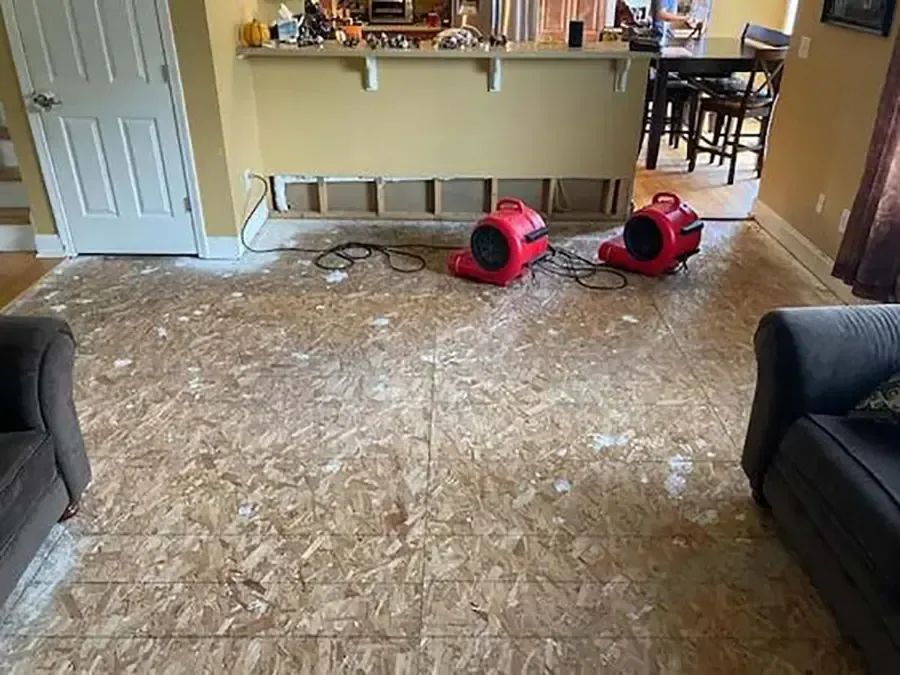
- Removal takes out carpet, pad, wet drywall, baseboards and insulation that soaked up Category 3 water.
- Cleaning and disinfection treat the hard surfaces and framing that stay.
- Structural drying uses air movers and dehumidifiers with daily readings until the structure reaches target.
Extraction and removal
The crew extracts standing water and mud first, then removes carpet, pad and wet drywall in the contaminated rooms. Removal is planned room by room so the mud does not travel.
Cleaning and drying
Surfaces that stay are cleaned and disinfected. Air movers and dehumidifiers then dry the structure, and daily readings show when it has reached target.
What Gets Removed and What Stays
Contaminated water changes the salvage decision. Porous materials that wicked it up are not safe to keep, while hard surfaces can be cleaned.
A storm and flood cleanup team sorts each room by material and by how long the water stood.
Wall insulation is the item most often overlooked. It soaks up contaminated water, stays wet for a long time and has to come out with the drywall that covers it.
- Carpet and pad are removed.
- Drywall is cut above the wet mark when it has wicked the water upward.
- Tile and sealed concrete are cleaned and disinfected in place.
- Furniture and belongings are sorted into clean, cleanable and discard groups.
Documenting the Loss Before Cleanup
The first photographs are the most useful ones. They show the high-water mark, the depth in each room and what was sitting on the floor.
Take wide shots of each room and close shots of damaged items, then write a short list of what was lost.
- Photograph the high-water mark on walls and furniture.
- Record the date and time of each photo set.
- List damaged belongings with a rough age and value.
- Keep drying logs and moisture readings once the equipment is running.
Why Timing Matters
Mud dries into materials and carries its contamination with it. Mold can start on wet surfaces within 24 to 48 hours.
Photographs and readings taken early show what the water did. They also help keep the dry-out on track once the equipment is running.
Water that is allowed to stand also soaks into the bottom of walls, cabinets and door frames. The longer it stays, the higher it wicks, and the more has to be cut out.
A short wait for the storm to pass is unavoidable. After that, scheduling extraction and removal quickly is the best way to keep the loss small.
Questions
Is creek or river water safe once it dries inside the house?
No. Dried residue can still carry bacteria and contaminants, which is why porous materials are removed and hard surfaces are cleaned.
Can I run fans and a dehumidifier myself?
Not before the contaminated water and mud are out. Household fans can spread contamination through the air, and drying equipment is sized for the whole loss.
Should I shut off the electricity?
Only if the breaker panel is dry and reachable without standing in water. Otherwise stay clear and have the utility or an electrician make the house safe.
Does every home near the river or the creek flood?
No. It takes a heavy storm, and most winters bring only a few. The goal is to know the first steps before one arrives.
Why does extraction come before drying?
Standing water has to leave before drying equipment can work on what remains. Removing it first also stops the water from wicking further into walls.
What if my garage floods but the house stays dry?
Garage water still counts as runoff and still needs extraction, because it can wick into the wall base shared with the house. The team checks the shared wall before calling it dry.