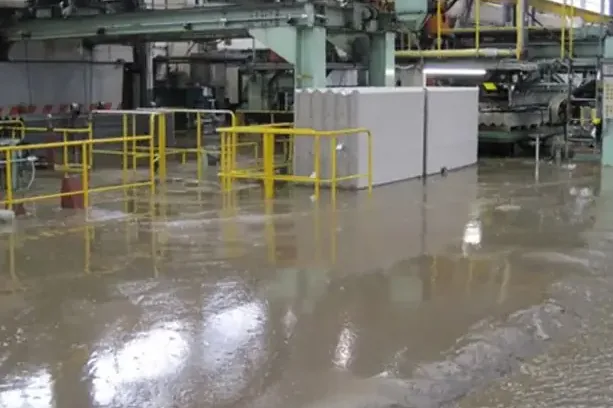
The Poway Business Park holds more than 500 businesses in light industrial, warehouse and research and development buildings. When water gets into one of those suites, the first day decides how much equipment, inventory and flooring has to be replaced.
Key takeaways
- Shut off the water source first and, where it is safe, power to wet equipment.
- Lift inventory, paper files and electronics off the floor before anything else.
- Photograph each room and item before anything is moved.
- Drying is done in phases, so unaffected parts of the suite can keep running.
- Tell the property manager early, because building systems and neighboring suites may be involved.
What a Water Loss Looks Like in a Business Park Building
The business park sits in the South Poway planned community and was designed for light industrial and manufacturing, warehousing and distribution, and research and development. Suites often pair offices in front with a warehouse, lab or production floor behind.
Water can come from a supply pipe, a fire protection fitting, a roof leak over an open bay or a restroom drain that backs up.
That mix of uses matters. A leak that starts in a break room can end up under a loading area, and a roof leak over a bay can wet equipment the office never sees.
- Concrete warehouse floors carry water toward racking and dock doors.
- Carpeted office areas wick water up into the walls.
- Mezzanines and dropped ceilings can hide wet insulation.
- Roof leaks over open bays can soak pallets and stored goods.
First Steps for a Tenant or Manager
The first steps are the same in a small office or a large warehouse bay. A commercial water damage restoration team can start extraction while the owner and the landlord sort out repairs.
The first contact is often the property manager, because the shutoff valve for a suite may sit in a shared room or a mechanical closet. Priority order helps: people first, then utilities, then high value items, then everything else.
- Find and close the valve that feeds the leaking pipe, or the main shutoff for the suite.
- Switch off power to wet areas where it is safe, and keep staff clear of wet floors near electrical gear.
- Move inventory, files and electronics off the floor and away from the wet area.
- Tell the property manager so building systems and neighboring suites can be checked.
- Take photos and video of every affected room and item before anything is moved.
Protecting Equipment, Inventory and Records
A water loss in a working suite puts more than flooring at risk. Machines, computers, stock and paper all react to water and to the humidity that follows.
Equipment and electronics
Powered machines, computers and test equipment can be damaged by water and by damp air. Do not switch wet equipment on to see whether it still works.
Label and photograph equipment before it moves. A written record of where each item sat makes later checks easier.
Inventory and paper
Cardboard and paper wick water quickly. Lift pallets and boxes that touch a wet floor first, then sort stock into wet and dry groups.
- Move high value items to a dry room before the rest.
- Use plastic sheeting only to cover items, never to wrap wet ones.
- Keep a written list of what moved and where it went.
How Phased Drying Keeps Operations Going
Commercial drying is planned in phases. Wet zones are contained and dried first so the rest of the suite can keep working.
A plan can be built around the shift schedule, with equipment placed to keep aisles and exits open.
Phasing also protects clean areas. Barriers, floor protection and controlled airflow keep moisture and dust from drifting into rooms that are still in use.
- Barriers separate the wet zone from the working zone.
- Extraction clears concrete and carpet before drying equipment is set.
- Air movers and dehumidifiers are sized to each zone.
- Daily moisture readings are logged for the manager.
Drying Concrete, Carpet and Wall Bases
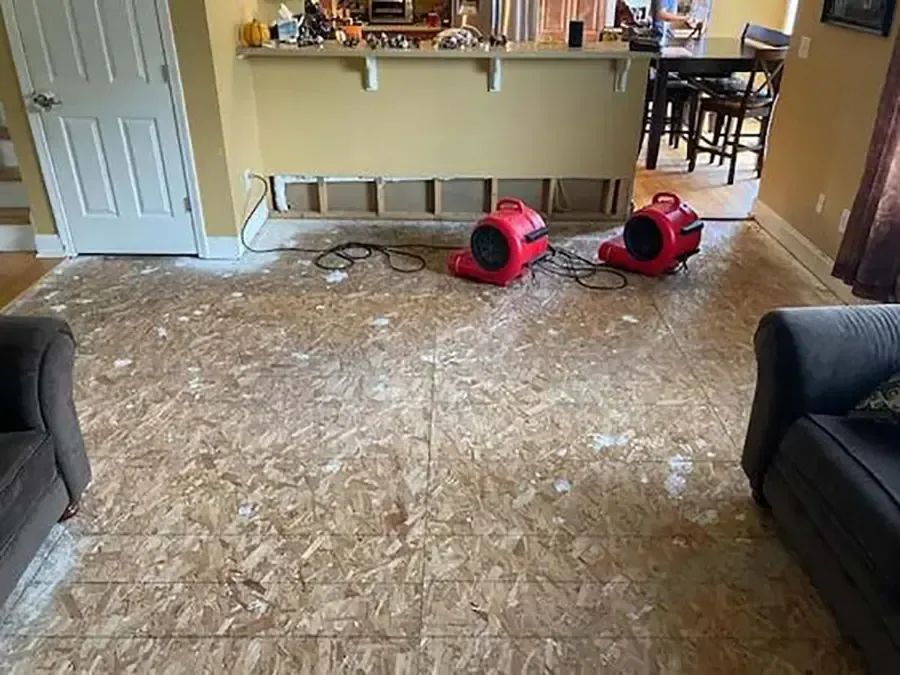
Industrial floors are mostly concrete, which holds moisture and releases it slowly. Office areas add carpet, pad and drywall that wick water upward.
The structural drying process sets a measured dry target for every material and checks it daily.
Warehouse bays with tall ceilings add one more factor. Moist air rises, so dehumidifiers and air movers are placed to move air across the floor and the walls, not only up into the roof space.
- Concrete is dried with dehumidifiers and airflow, with readings taken at set spots.
- Carpet and pad are usually removed after a pipe leak.
- Drywall and baseboards are checked above the wet mark and opened where readings stay high.
Working With the Landlord and Property Manager
In a multi-tenant building, who fixes what depends on the lease and on where the leak started. A water loss can involve the roof, shared pipes or fire protection that the tenant does not control.
Clear records help every party. Photos, readings and a written log keep the facts in one place.
A short written summary of what happened, when it was found and what was done helps with questions later. Copy it to the property manager and keep one for the suite.
- Share the photos and moisture readings with the manager.
- Ask which building systems belong to the landlord and which to the tenant.
- Keep a written log of every visit, call and repair.
Bathroom Backups and Why Speed Matters
A restroom or floor drain backup in a suite is handled as sewage, which is Category 3 water. Porous materials that soaked it up are removed.
Mold can begin on wet materials within 24 to 48 hours, so extraction and drying start as early as possible. The water damage cost calculator can give a planning number once the wet area is known.
If the restroom drain feeds a shared pipe, the backup may start somewhere else in the building. Tell the manager at once so the source can be found.
Questions
Can the business stay open during drying?
Often part of it can. Wet zones are contained and dried first, and equipment is placed to keep aisles and exits clear.
Do I have to move the inventory myself?
Moving stock off a wet floor right away helps most. The crew can help lift and sort once extraction starts.
What if a neighboring suite caused the leak?
Photograph the damage and tell the property manager. The drying team dries what is wet whatever the source.
How is a concrete warehouse floor dried?
With dehumidifiers and steady airflow, and daily readings at fixed spots. Concrete releases moisture slowly, so the job runs until the readings reach target.
Is computer and test equipment safe to turn on after it gets wet?
No. Leave it off and have it checked, because power can damage wet electronics further.
Should staff stay in the suite during cleanup?
Staff stay out of wet and contained zones. The team marks which parts of the suite are safe to use and which are not.