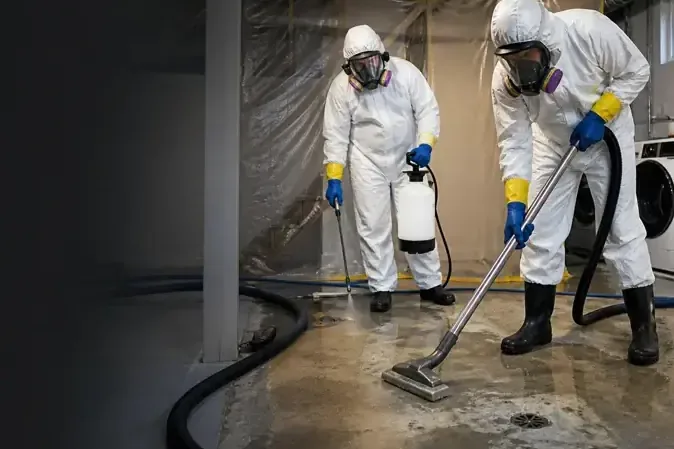
When sewage comes up through a tub or floor drain in a Poway home, the first question is where the blockage sits. Poway is the only city in San Diego County that takes responsibility for the sewer lateral between the cleanout at the property boundary and the sewer main.
Key takeaways
- A sewer backup is a Category 3 water loss and is handled as contaminated, never as a simple spill.
- The cleanout at the property boundary is usually in the front yard near the sidewalk or curb, inside a rectangular or round box.
- The city takes responsibility for the lateral from the cleanout to the sewer main and cleans that section.
- The city asks residents not to flush wipes, even ones labeled flushable, or diapers, cooking grease and paper towels.
- Cleaning and drying the inside of the house is restoration work, separate from the pipe.
Where a Sewer Backup Starts
Wastewater leaves a house through a lateral, a pipe that runs out to the sewer main. When the lateral or the main is blocked, wastewater backs up to the lowest drain in the house.
That drain is often a shower, a tub or a floor drain, and the first signs tend to appear in the lowest bathroom.
A backup in the lowest drain is a clue, not proof, because the blockage can sit inside the house, in the lateral or at the main. Water that comes up in several drains at once usually points past the pipes inside the house.
- More than one drain slows down at the same time.
- A toilet bubbles or gurgles when a sink drains.
- A sewage smell rises from a floor drain.
- Water or waste shows in a tub or shower with no one using it.
Finding the Cleanout at the Property Boundary
A cleanout is a capped access point in the lateral. In Poway it is usually in the front yard near the sidewalk or curb, inside a rectangular or round box.
If the yard has no box, the property has no cleanout yet, and a plumber would have to add one before the lateral can be cleaned.
The lid stays closed unless a plumber or the city is working on the pipe.
- Look for a small rectangular or round lid at ground level near the curb.
- Check the lid and the box without reaching into the pipe.
- Sewage standing in the box usually points to a blockage past that spot, toward the main.
- Tell the plumber or the city exactly what was seen in the box.
What the City Takes Responsibility For
Poway is the only city in San Diego County that takes responsibility for the sewer lateral from the cleanout at the property boundary to the sewer main, and the city cleans that section.
That section starts at the cleanout. It does not extend into the house, so cleaning floors, walls and belongings is a separate job from clearing the pipe.
Knowing where that boundary sits helps in a conversation with a plumber or the city, because the first question is usually which side of the cleanout the blockage is on.
First Steps Inside the House
The first move is to stop sending more wastewater toward the blocked pipe. A sewage backup cleanup team can begin containment while the pipe question is sorted out.
Ventilation helps with odor but does not make the water safe. Opening a window is fine, while running fans across a wet floor can spread contamination through the room.
- Stop using toilets, sinks, showers and appliances that drain.
- Keep everyone, pets included, out of the wet room.
- Do not use a household wet vacuum on sewage.
- Photograph the wet area from the doorway before anything is moved.
- Close doors to the affected room so wet shoes do not carry contamination through the house.
How the Indoor Cleanup Works
Sewage is Category 3 water. The restoration crew sets up containment first, so the contamination stays in one room.
Extraction and removal
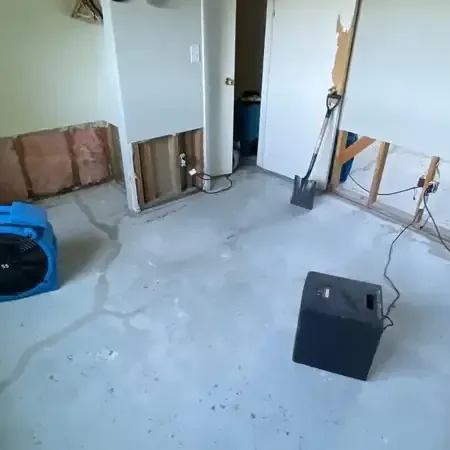
Standing water is extracted before anything else, and water extraction comes first in every backup. Porous materials that absorbed it, such as carpet, pad and wet drywall, are then cut out and bagged.
Water is removed in a set path, from the cleanest part of the room toward the dirtiest, so the extraction itself does not drag contamination behind it.
Disinfection and drying
Hard surfaces and framing are cleaned and treated with an antimicrobial. The room is then dried with air movers and dehumidifiers, with readings taken until it reaches a dry target.
Afterward the crew checks wall bases, door frames and cabinet toe kicks with a moisture meter, because wastewater runs into places the eye misses.
Keeping Wipes and Grease Out of the Pipes
The city warns against flushing wipes, even ones labeled flushable, as well as diapers, cooking grease and paper towels. These items snag inside laterals and mains and build into blockages.
A few habits in the kitchen and bathroom lower the odds of a repeat.
Kitchens matter as much as bathrooms. Grease poured down a sink cools, hardens and narrows the pipe a little at a time.
- Wipes go in the trash, whatever the package says.
- Cooking grease goes into a can, not down the sink.
- Paper towels and diapers go in the trash.
Why Speed Matters After a Backup
Wastewater soaks into porous materials fast, and mold can begin on wet materials within 24 to 48 hours. Early containment keeps the contaminated area small.
The water damage cost calculator gives a planning number once the size of the wet area is known.
Documentation helps as well. Photographs of the wet area, a note of the date and a list of what was in the room give a clear starting record.
Questions
Who is responsible for a blocked sewer lateral in Poway?
The city takes responsibility for the lateral between the cleanout at the property boundary and the sewer main, and it cleans that section. What lies between the cleanout and the house is a different part of the system, so a plumber is the person to check it.
Does the city clean up the inside of the house after a backup?
The city's section is the lateral from the cleanout to the main. Cleaning and drying the interior is restoration work.
What if my home has no cleanout?
A plumber would need to install one before the lateral can be cleaned from that point. The cleanout is usually in the front yard near the sidewalk or the curb.
Is sewage backup water dangerous?
Yes. It is Category 3 water and carries bacteria and other contaminants, so people and pets stay out of the wet room and porous materials are removed.
Can wipes labeled flushable go down the toilet?
The city warns against flushing wipes even when the package says flushable. They are a common reason pipes block.
Should I call a plumber or a restoration team first?
Both are usually needed, and they do different jobs. A plumber or the city deals with the blockage, and the restoration team contains and cleans what already reached the floor.