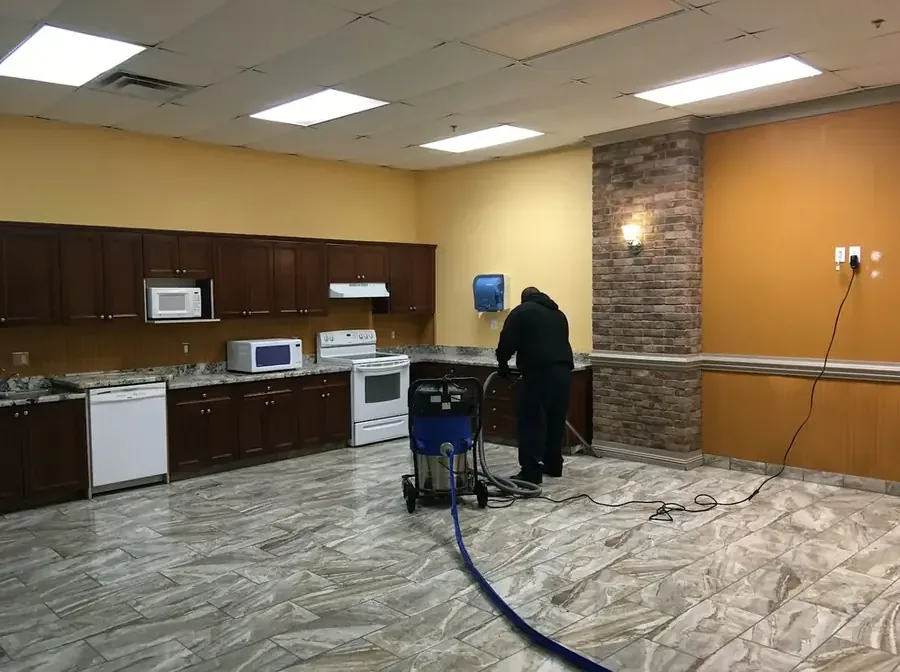
Water on a floor does not stay on the floor. Poway averages about 14 inches of rain a year, mostly in winter, but the water can come from a failed pipe, a leaking appliance or a storm, and extraction has to come before any fan is switched on.
What happens before the pump starts
- The source is found and stopped
- Electrical hazards near the water are checked
- The water category is decided, since it sets the method
Water that has sat in a pad for a day is a different job from fresh water, so the first look decides how much comes up and how much stays behind.
Carpet, pad and hard floors
Carpet usually gets weighted extraction, a slow pass that squeezes water out of the fibers and the pad beneath. If the pad is saturated or the water was dirty, the pad is lifted and the tack strip and baseboards are checked.
When extraction is not the end
Pulling up visible water removes the bulk of it, but the rest sits in subfloors and the bottoms of walls. Air movers and dehumidifiers finish the job, with structural drying readings logged until the materials match a dry reference.
When the water came from inside a wall, the burst pipe steps add cavity drying to the extraction.