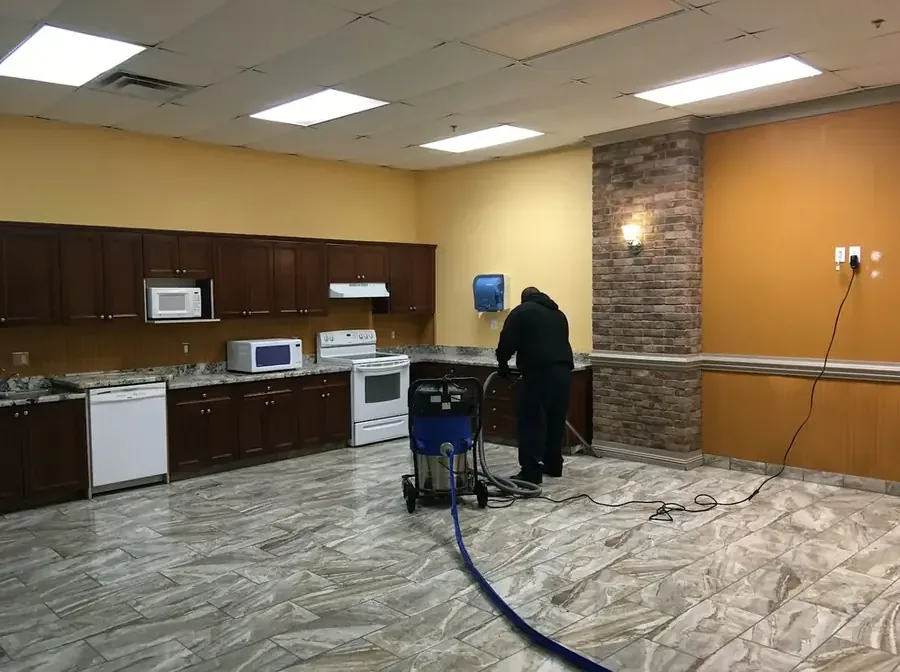
A water main break is a utility problem on the street. The water that reaches a nearby building is a different problem, and it is the part a restoration team handles.
Key takeaways
- Poway Fire and city crews shut the valve on a main break, and owners do not shut off a street main.
- Water that reaches a building after a break is judged by what it crossed on the way in.
- Stay out of moving water, keep clear of outlets and electrical panels, and lift belongings up.
- Extraction comes first, then moisture mapping and drying.
- Photograph the high-water mark, the entry point and the street conditions.
What a Main Break Looks Like on the Ground
On April 11, 2016, a water main break in Poway sent water into the parking lot of a business complex and raised sinkhole concerns. Poway Fire and city crews shut the valve.
On September 22, 2026, a main break on Stone Canyon Road near Fallen Leaf Road was isolated and shut down.
Both events show the pattern. Utility crews stop the water at the street, and what the water did to nearby property is a separate matter.
Neither event predicts what will happen to any one building. They show how quickly a street problem can turn into a parking lot, a threshold or a loading dock problem.
Who Does What After a Break
Several different people have a part after a break, and each one has a different job.
No single step replaces the others. Street work can take hours, while water standing on a floor starts moving into the walls right away.
- The utility and fire crews isolate and shut the valve on the main.
- A plumber handles private pipe on the property.
- The restoration team extracts water, removes wet materials and dries the structure.
- The owner or manager documents the loss and informs the property manager.
- Neighbors and tenants share what they saw with the property manager so the facts stay consistent.
How Main Break Water Reaches a Building
Water from a main break can cross a parking lot and push under a door, through a loading dock or over a threshold. It can also pour into low rooms and soak concrete floors.
Slab floors and door tracks are the usual first victims. Water only a few inches deep outside can still push through a gap under a door.
- Door thresholds and loading doors at ground level.
- Openings where utilities pass through walls and slabs.
- Low rooms, stairwells and below grade spaces.
- Planters and landscape beds that slope toward a wall.
Water Categories After a Main Break
The water inside the main is clean, which is Category 1. Once it crosses pavement, soil and landscaping, it can collect contamination.
The team decides the category from what the water touched and how long it stood. That decision sets what can be dried in place and what has to be removed.
Photographs of the path help here. A shot of the parking lot, the door and the floor inside shows how the water traveled, which in turn informs the category.
- Water that entered quickly and touched only hard floors may be dried in place.
- Water that crossed soil or sat in carpet is treated as contaminated.
- Porous materials such as pad and insulation are the first to be removed.
- Long standing water in carpet can change the category even when it started clean.
First Steps Inside the Building
Safety comes ahead of belongings, because water and electrical equipment do not mix. A water extraction crew can start once the area is safe.
Electrical safety is the first concern. A wet floor near a panel, a pump or a powered machine is a hazard until the power is off and the area has been checked.
Call for restoration help as soon as the area is safe. Extraction started early limits how far the water climbs into walls, cabinets and stored goods.
- Stay out of moving water and keep away from outlets and electrical panels.
- Move stock, records and electronics to higher shelves.
- Close the building's own shutoff valve if a pipe inside is leaking.
- Photograph the high-water mark, the point where water entered and the street conditions.
- Tell the property manager so shared systems can be checked.
Extraction, Mapping and Drying
A building that took in water from a main break follows the same steps as any other water loss. The order is extraction first, mapping next and drying last.
Extraction first
Pumps and extraction units pull standing water off concrete, tile and carpet. The quicker water leaves, the less of it wicks into walls and wall bases.
Truck-mounted units handle large volumes, and portable units reach tight spots such as corners, thresholds and the space under counters.
Mapping and drying
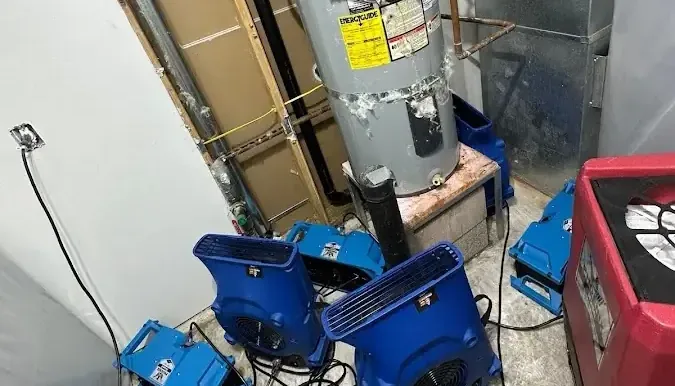
A thermal camera and moisture meters show where water traveled. Air movers and dehumidifiers dry the structure, and the commercial water damage team logs readings until it reaches target.
The moisture map is repeated every day, which shows whether drying is on track or a wet pocket was missed. The drying time estimator gives a rough idea of how long a floor of this kind may take.
Pavement, Soil and Sinkhole Concerns
Water under pavement can undermine it, which is why the 2016 break raised sinkhole concerns. If the ground near a building dips, cracks or settles, keep people away from it.
Report that kind of change to the city and tell the property manager. A restoration team dries the building, and ground movement is a separate question for the people who manage the site.
Neighbors and tenants share these concerns. A short note to the property manager about what was seen keeps everyone working from the same facts.
The same caution applies to utilities. A building with a leaning wall, a dropped floor or a gap under the slab needs a professional look before anyone returns to the space.
- Keep people and vehicles off pavement that dips or cracks.
- Do not backfill or patch a washout yourself.
- Photograph the change in the ground for the record.
Questions
Does a restoration team repair the water main?
No. Utility crews isolate and repair the main. The restoration team extracts water and dries the building.
Is main break water clean?
It is clean inside the pipe. After it crosses pavement and soil it can collect contamination, so the category depends on its path into the building.
Should I turn off the water to my building?
Close the building's own shutoff if a pipe inside is leaking. A valve on the street main belongs to the utility.
Can a main break flood a slab floor building?
Yes. Water pushed under a door spreads across a concrete floor and wicks into wall bases, which is why extraction starts first.
How long do materials have to dry?
Days, not hours, and the time depends on the materials. Daily readings show when each one reaches its target.
What should I photograph after a main break?
The street conditions, the point where water entered, the high-water mark on walls, damaged items and any equipment that got wet.