Water above a ceiling has to go somewhere, and it usually goes into drywall and insulation first. The drying team starts by asking where the water came from, because a roof leak and a leaking supply pipe need different fixes.
Tracing the source
- Stains that grow only after rain point to the roof
- Drips in dry weather point to a pipe or fixture above
- A clogged air conditioner condensate drain can overflow into the ceiling
Once the source is found, the repair is scheduled, and the drying plan is built around what the water actually touched.
Opening a wet ceiling
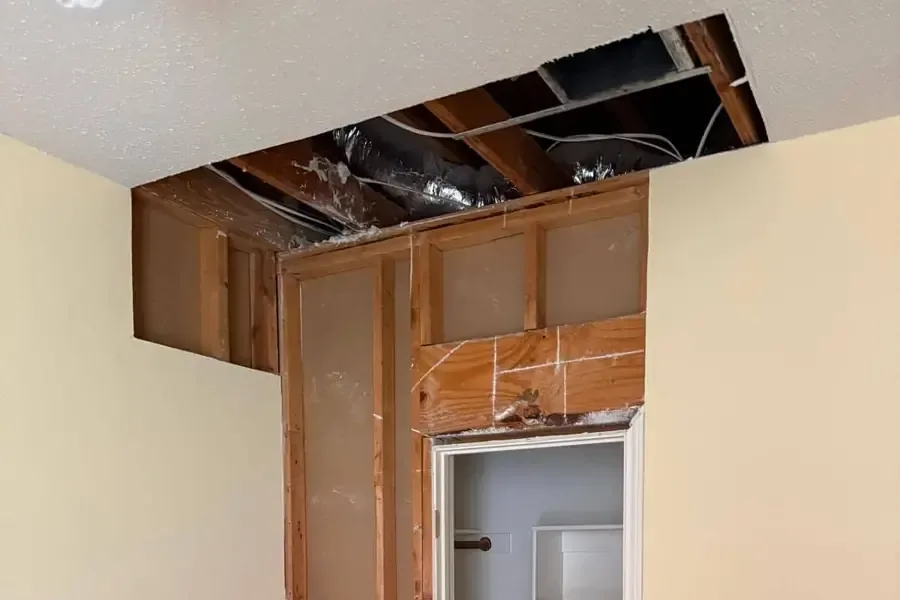
Drywall that is soft, stained or sagging is removed so the joist bays can dry. Insulation that has soaked is bagged out, and the cuts are kept straight and modest so the patch is simple afterward.
A bulging ceiling is holding water and can drop without warning. It should be left alone, photographed from the side and kept clear of people and electric fixtures until it is released safely.
Drying and checking below
Air movers and a dehumidifier dry the open cavity, and the walls and flooring beneath are checked with a meter for water that ran down. Where the water came from rain, the roof leak steps apply as well, and a supply pipe source follows the burst pipe steps.