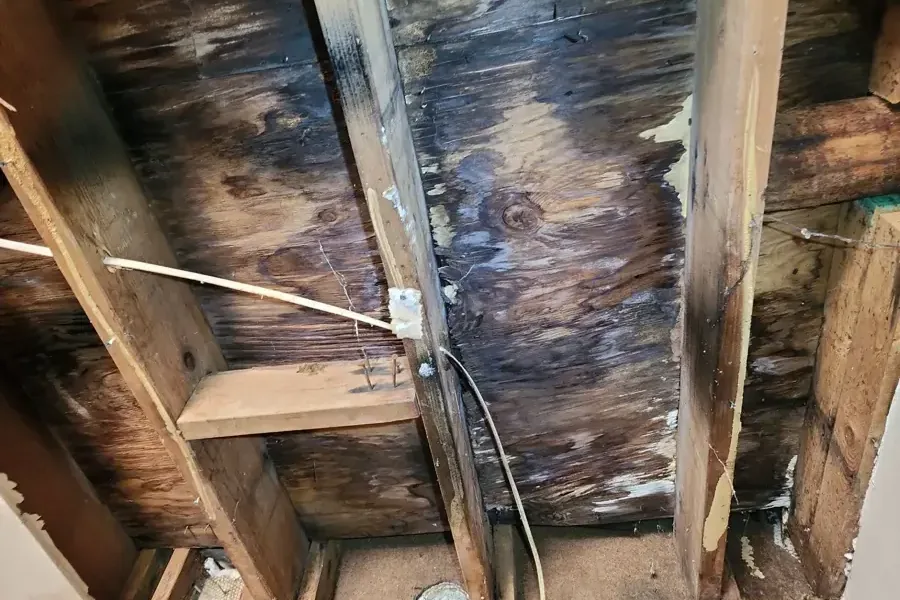
A roof leak rarely stays where it enters. Rain follows rafters and decking, soaks attic insulation and then shows up as a brown ceiling stain a room away, so the drying team traces the path before cutting anything open.
Find the path from the attic
Moisture meters and a thermal camera show how far the water spread across the ceiling and into the walls below. The attic is checked for wet insulation, stained decking and damp joists before any ceiling is opened.
- Compressed insulation that stays wet is removed
- Decking and rafters dried in place
- Ceiling drywall opened only where it is soaked
Roof repair and drying go together
A roofer stops the leak at the source, and the drying team removes the water the leak left behind. Fixing only the roof leaves wet insulation and framing inside, which can hold moisture for weeks until structural drying brings the readings down.
When the ceiling comes down
A sagging or bulging ceiling is holding water and can fail without warning, so it should be left alone and photographed from a safe spot. Once opened, joists and insulation dry well, and the ceiling leak process covers the room below.
Photos of the stain, the attic and the readings each day make the claim file easy for an adjuster to follow.