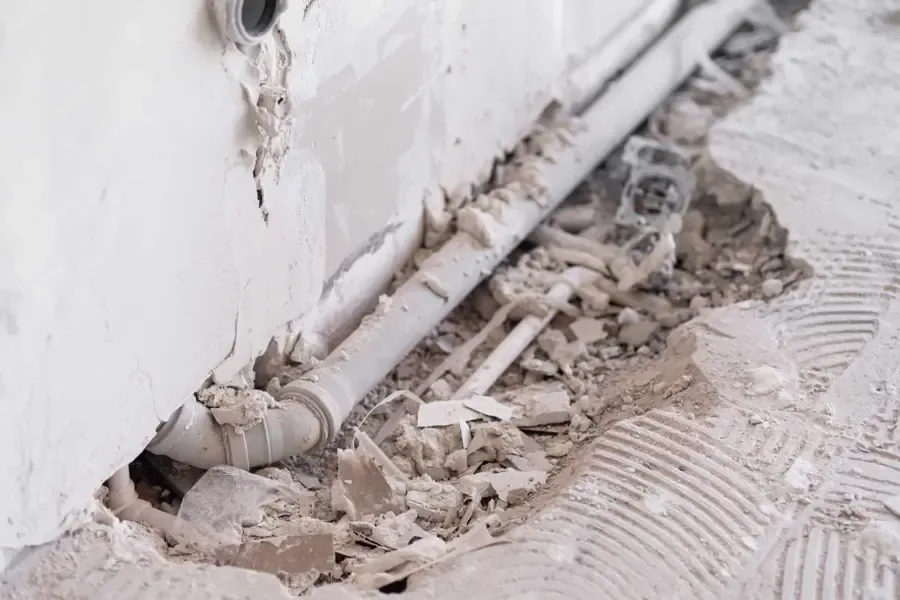
About 80 percent of the city's housing units are single-family homes. When a supply pipe leaks under a concrete floor, the water spreads beneath carpet, laminate or tile before it shows. A plumber locates the leak with leak detection, and the drying team takes over once the pipe is repaired.
Signs of a leak under the floor
- The water meter keeps moving with every fixture off
- A warm patch on the floor from a hot-side leak
- Damp carpet or lifting flooring with no visible source
- A rising water bill or the sound of running water
A simple meter test from the EPA is the quickest home check, and the drying time estimator gives a rough range for concrete.
What the drying team does
The tech who does the walkthrough maps moisture across the floor with meters, marks the wet edge and photographs it. Only flooring that reads wet comes up: carpet and pad first, then laminate or tile where the readings require it.
- Baseboards pulled to vent the lower walls
- Cabinet toe kicks opened if the leak reached the kitchen
- A dry reference reading taken in an unaffected room
Drying concrete takes patience
Concrete holds water deep and gives it up slowly, so most leaks under a floor become a Class 4 loss. The drying team runs desiccant or LGR dehumidifiers, sometimes with drying mats, until readings match the dry reference.
The EPA advises drying wet building materials within 24 to 48 hours, and structural drying explains the equipment in more detail.