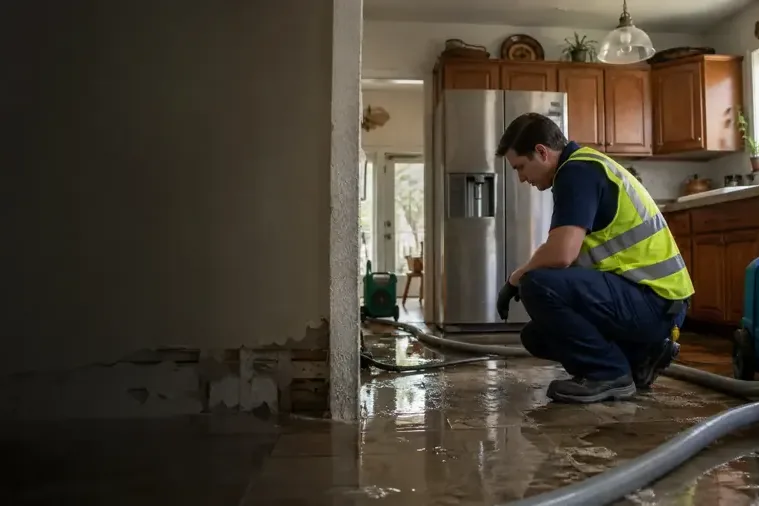
Appliance leaks are household plumbing failures, and they are rarely dramatic. A washer hose that seeps or a dishwasher valve that drips can soak a floor for days. Poway housing runs from apartments to single-family homes on large rural parcels, so the damage may reach a neighbor below.
Stopping the source
- Close the shutoff valve behind the washer or sink
- Pull the appliance plug if the outlet is dry
- Mop standing water so it stops spreading under cabinets
Water category depends on where the water came from. A supply hose delivers clean water, but a dishwasher or washer drain can release gray water, and clean water turns gray as it sits, a pattern also seen in a water heater leak.
What gets opened
Toe kicks come off so the cabinet bases can be dried, and baseboards are pulled where water wicked up the wall. Flooring is checked underneath with a meter, since laminate and vinyl can trap water above a wet subfloor.
- Cabinet bases vented and dried
- Pad replaced where soaked
- Subfloor read before anything is closed
Leaks in shared buildings
In an apartment or condo, water can pass through the floor to the unit below, so a leak should be reported quickly to the owner or manager. Photos of both units and daily readings make the claim easier to sort out, and the wet floor follows the same steps as water extraction.