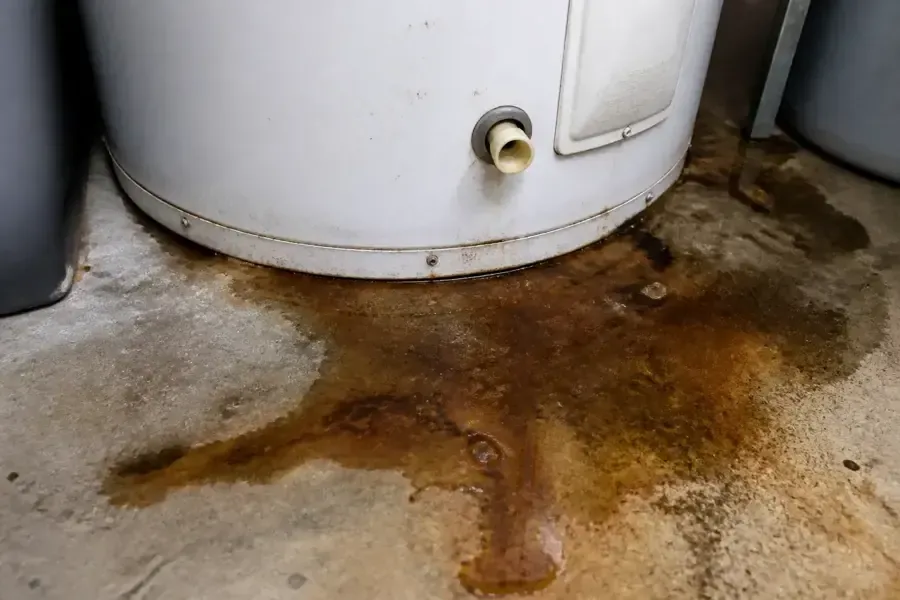
The leak can start at the tank, a valve or a pipe fitting, and the water goes wherever the floor slopes. Garages and utility closets take the first hit, and a shared wall can carry moisture into the next room.
Stopping the leak first
- Close the cold supply valve above the tank
- Switch off the heater's power or gas before touching it
- Open a hot tap to relieve pressure in the pipes
A plumber replaces or repairs the tank. The drying team starts after the water has stopped, since meters read the same wet floor over and over while a leak is still running.
Drying the closet and the floor
Standing water is extracted from the floor first, then baseboards are removed so the base of the shared wall can dry. Carpet and pad are lifted if saturated, and the subfloor under the tank is metered.
- Lower drywall opened where it wicked water
- Insulation behind the wall checked
- Heater platform and nearby cabinets dried
Knowing when it is dry
Air movers and dehumidifiers run, as in any structural drying job, until the wood and drywall read like unaffected areas. The daily log, photos and readings form the file an adjuster needs, much like the appliance leak file does.